ZAMBALES, Philippines — A reported ₱146 million worth of suspected smuggled cigarettes and equipment discovered at a controversial pier in Palauig, Zambales, has brought renewed attention to illicit tobacco trafficking, maritime security and the use of coastal facilities for potentially unauthorized cargo operations.
The discovery has also raised a critical question: How did a pier reportedly subject to a cease-and-desist order since 2022 become the unloading point for suspicious cargo?
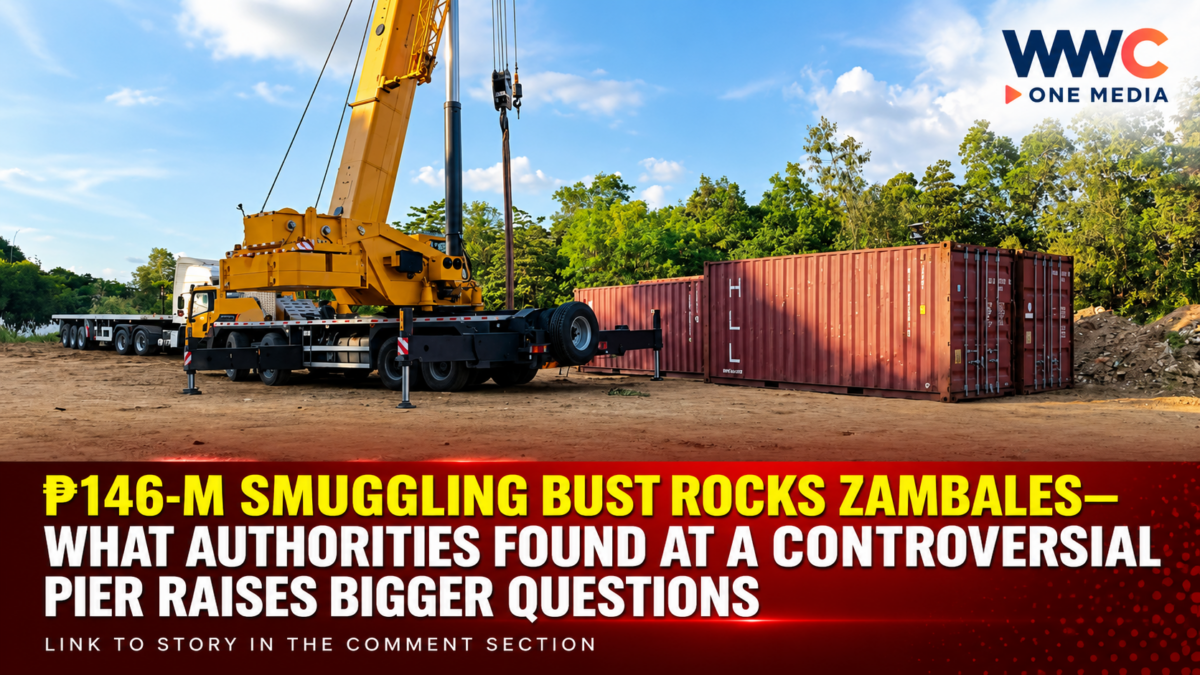
According to reports from the Philippine Daily Inquirer and Abante Tonite, four shipping containers believed to contain smuggled cigarettes were discovered at BNB Pier in Sitio Luan, Barangay Lipay, Palauig.
The Philippine Coast Guard (PCG) reported that an unidentified vessel had unloaded the containers at the facility. The pier is located within the 7,558-hectare Masinloc and Oyon Bay Protected Landscape and Seascape, a protected area covering portions of Masinloc and Palauig.
Four containers, heavy equipment discovered
According to Abante Tonite’s October 21 report, personnel from the Community Environment and Natural Resources Office (CENRO) entered the facility and confirmed the presence of four sealed shipping containers, a crane and a flatbed truck.
The PCG said its Coast Guard Sub-Station in Palauig and Coast Guard Intelligence Unit in Zambales verified information about the suspicious shipment with assistance from residents and other authorities.
Initial information attributed to the Bureau of Customs suggested that the cigarettes may have originated from Taiwan and were intended for distribution in the Philippine market.
However, the shipment’s origin and intended recipients have not been conclusively established in the independently accessible reporting.
Why the pier’s history matters
Beyond the suspected smuggling operation, the location of the discovery has attracted attention.
BNB Pier is reportedly an illegally constructed facility that has been subject to a cease-and-desist order since 2022.
Its location within a protected landscape and seascape raises additional questions about regulatory compliance, environmental protection and oversight of maritime activities.
The circumstances warrant further investigation into whether the facility was operating despite restrictions and who authorized or facilitated the unloading of the containers.
The existence of the cease-and-desist order, however, does not by itself establish who was responsible for the suspicious cargo.
A wider crackdown on illegal cigarettes
The Zambales discovery comes amid a broader nationwide campaign against cigarette smuggling.
In August 2026, the Philippine Information Agency reported that the Bureau of Customs and National Bureau of Investigation had strengthened their cooperation following operations involving more than ₱3 billion worth of illegally shipped cigarettes in Manila and Cebu.
Officials emphasized that coordinated enforcement was necessary to protect government revenues and prevent illegal goods from entering domestic markets.
The crackdown has also extended to other provinces.
On October 9, The Philippine Star reported that authorities had seized approximately ₱53.98 million worth of illegal cigarettes in Ternate, Cavite. Police discovered 793 boxes of cigarettes in three closed vans, while 14 individuals were held in connection with the operation.
The same report described a separate interception involving ₱18.67 million worth of suspected smuggled cigarettes in Zamboanga City.
These incidents are separate from the Zambales discovery, but together they illustrate the continuing challenge of policing the country’s extensive coastline and transportation networks.
Why cigarette smuggling is a national concern
Smuggled cigarettes pose more than a customs enforcement problem.
Illicit tobacco products can evade excise taxes, undermine legitimate businesses and reduce government revenue that would otherwise support public services.
The Bureau of Customs has also previously identified shipments lacking required tax stamps, health warnings and proper markings.
In February 2026, the agency announced the interception of ₱39.3 million worth of illicit cigarettes and dried tobacco products destined for Manila, some concealed in containers declared as dried fish or general merchandise.
Such cases highlight how falsified shipping declarations and gaps in cargo inspection can be exploited by illicit traders.
The unanswered questions
Several important details surrounding the Zambales shipment remain unresolved in the reports available for verification.
Authorities have yet to publicly establish, through the sources reviewed, the identity of the vessel that delivered the containers, the parties responsible for the cargo, and whether any criminal charges have been filed.
The final inventory and valuation of the seized materials are also important to confirming the full scale of the reported operation.
For now, the discovery at BNB Pier underscores two pressing issues: the continuing threat of cigarette smuggling and the need for effective oversight of coastal facilities, particularly those already facing regulatory restrictions.
The central question remains: Who arranged the shipment, and how was the cargo unloaded at a pier reportedly ordered to cease operations years earlier?