
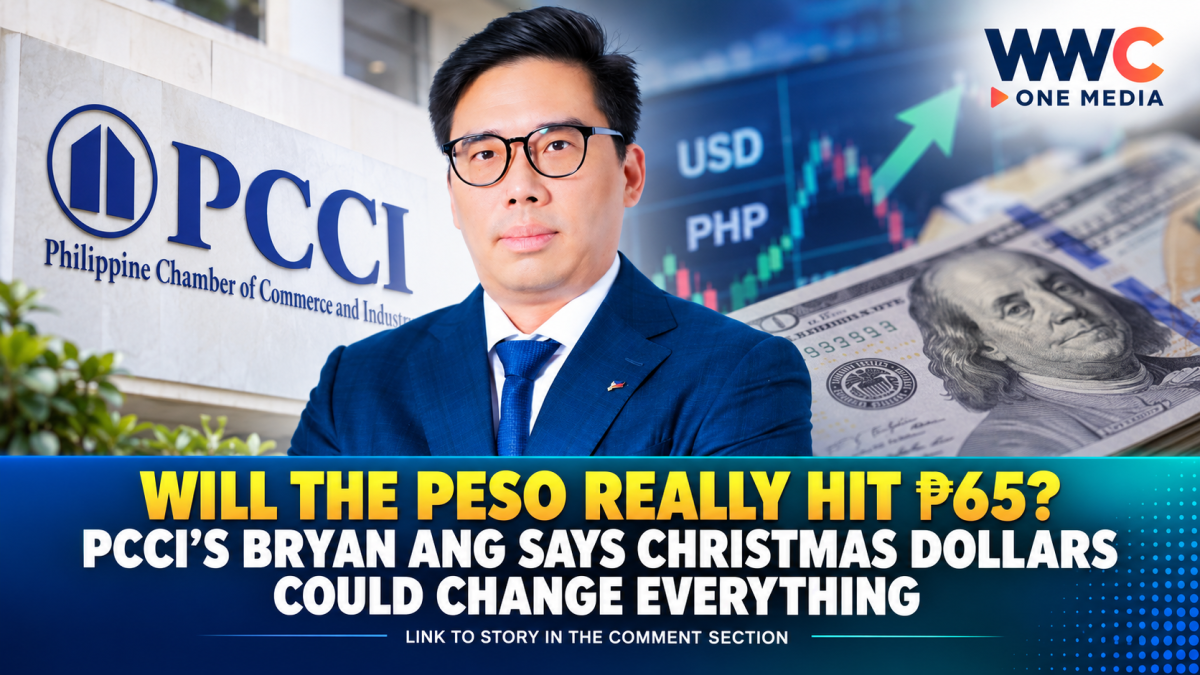
MANILA, Philippines — The Philippine peso may be under intense pressure, but the currency is unlikely to plunge all the way to ₱65 against the US dollar, according to Philippine Chamber of Commerce and Industry (PCCI) official Bryan Ang, who believes a seasonal surge in overseas Filipino remittances and steady dollar earnings from the country’s business process outsourcing industry could provide crucial support.
Ang, PCCI vice president for trade and industry, said the approaching Christmas season traditionally brings stronger foreign currency inflows as overseas Filipinos send more money home to their families.
Those remittances, combined with the billions of dollars generated by the Philippines’ BPO sector, could serve as an important buffer against further peso depreciation.
But with the peso already trading near historic lows, the bigger question remains: Will those dollar inflows be enough to stop the currency’s slide?
Why Bryan Ang Doesn’t Expect the Peso to Hit ₱65
Ang said he does not expect the peso to weaken to the ₱65-per-dollar level because of the anticipated increase in remittances in the coming months.
The Christmas season is traditionally one of the strongest periods for money transfers from overseas Filipinos, creating additional demand for pesos and increasing the supply of foreign currency entering the Philippine economy.
The BPO industry is expected to provide another layer of support.
The outsourcing sector remains one of the country’s major sources of dollar earnings, alongside remittances, tourism and exports. Ang described the combination of Christmas remittances and BPO revenues as a potential “saving grace” for the country’s foreign exchange position.
His assessment comes as the peso faces mounting pressure from several economic forces.
Peso Pressured by Oil Imports, Trade Deficit and Global Dollar Strength
Ang pointed to the Philippines’ dependence on imported fuel as one of the factors increasing demand for US dollars.
When global oil prices rise, the country generally needs more dollars to pay for imported petroleum products, adding pressure to the peso.
The Philippines’ persistent trade deficit is another major concern. The country typically imports significantly more goods than it exports, creating a continuing demand for foreign currency.
Ang also cited movements in US interest rates, which can influence global capital flows. Higher returns on dollar-denominated assets can encourage investors to move funds toward the United States, strengthening the dollar against other currencies.
The broader global environment remains uncertain. Recent international market reports have shown the US dollar holding firm in the short term amid shifting expectations surrounding US monetary policy and economic data.
BSP Data Shows Peso Still Under Heavy Pressure
The concerns surrounding the peso are reflected in recent official data.
The Bangko Sentral ng Pilipinas listed the Philippine peso equivalent at ₱62.6140 per US dollar as of September 3, 2026, underscoring how close the currency remains to record-low territory. The BSP has also raised its target reverse repurchase rate to 5 percent as monetary authorities work to contain inflation and broader economic pressures.
Analysts quoted in recent market reports have also said the peso’s weakness is being driven by structural problems, including weak export performance relative to import demand, a balance-of-payments deficit and continued external risks.
However, some economists expect seasonal remittance inflows later in the year to provide support. One recent analysis projected the peso could move closer to ₱61 per dollar by year-end if seasonal dollar inflows strengthen as expected.
Could the Peso Still Reach ₱63?
While Ang doubts the peso will fall to ₱65, other analysts remain cautious.
The University of Asia and the Pacific recently warned that short-term pressures from oil price volatility and the country’s trade deficit could still push the peso toward ₱63 per US dollar.
The same outlook noted that remittance growth faces potential risks, even as overseas Filipino transfers remain a major pillar supporting the Philippine economy. Cash remittances in the first half of 2026 reached $17.15 billion, up 2.4 percent from the same period a year earlier, according to the latest figures cited in the report.
This suggests that while Christmas remittances could offer temporary relief, they may not completely solve the underlying pressures weighing on the currency.
BSP Monitoring Foreign Exchange Market
The Bangko Sentral ng Pilipinas has said it is closely monitoring developments in the foreign exchange market.
The central bank has reiterated that it can intervene to address disorderly market conditions and excessive volatility, particularly when sharp currency movements threaten to fuel inflation.
That distinction is important: the BSP does not necessarily defend a specific peso level but can act when market movements become disorderly or create wider risks for the economy.
A weaker peso can make imports more expensive, potentially increasing prices for fuel, food, raw materials and other imported products.
Is a Weak Peso Good for the Philippines?
A weaker currency can sometimes help export-driven economies because locally produced goods become cheaper for foreign buyers.
But Ang argued that the Philippines is not currently benefiting from the kind of strong export environment that would allow the country to fully capitalize on a weaker peso.
That leaves policymakers and businesses facing a difficult balance.
A weaker peso may benefit some exporters and Filipinos receiving dollar income, but it can also raise costs for consumers and businesses that depend heavily on imported goods and raw materials.
Christmas Remittances Could Be the Peso’s Biggest Test
The coming months could now become a critical test for the Philippine currency.
If overseas Filipino remittances increase sharply during the Christmas season and BPO dollar earnings remain strong, those inflows could provide the peso with much-needed support.
But oil prices, the country’s trade deficit, global investor sentiment and the strength of the US dollar will continue to influence the exchange rate.
For now, Bryan Ang remains unconvinced that the peso will crash to ₱65.
The currency, however, is entering the final months of the year under significant pressure — and with economists warning that ₱63 remains possible, Filipinos will be watching closely to see whether the expected flood of Christmas dollars can actually change the peso’s direction.
The question now is no longer just whether the peso can avoid ₱65 — but whether the Christmas season can finally give the struggling currency the relief it desperately needs.
WWC ONE MEDIA J.M.S



Leave a Reply