
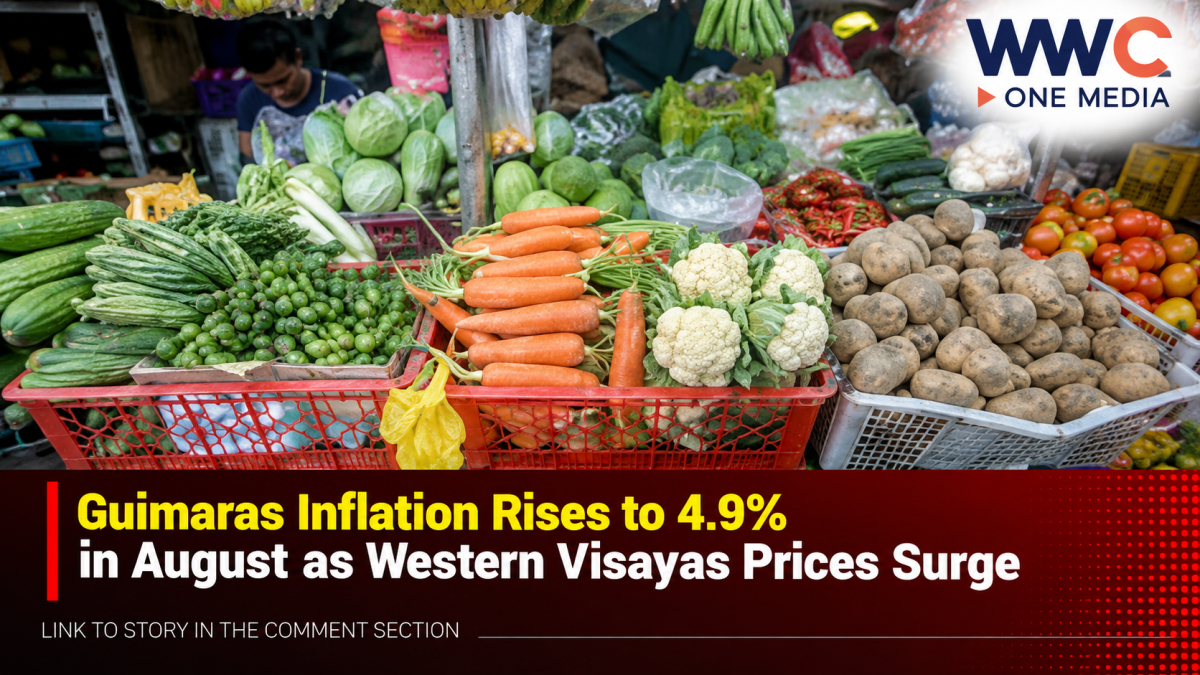
GUIMARAS INFLATION ACCELERATES TO 4.9%
Guimaras saw its inflation rate climb to 4.9% in August 2026, up from 4.6% in July, according to the latest Philippine Statistics Authority (PSA) data.
The increase means consumer prices in the province continued to rise at a faster pace than the previous month, although Guimaras remained among the areas with comparatively lower inflation in Western Visayas.
The August figure also remained below the 6.1% national inflation rate and well below Western Visayas’ 8.4% regional inflation rate for the same month.
WESTERN VISAYAS SEES A MUCH SHARPER PRICE JUMP
Guimaras’ increase came as inflation accelerated sharply across Western Visayas.
The region recorded 8.4% inflation in August, up from 7.8% in July. The PSA said the regional increase was driven largely by higher prices in housing, water, electricity, gas and other fuels, while other commodity groups also contributed to the overall acceleration.
That puts Guimaras in a somewhat different position from the regional trend: while prices also accelerated in the province, its 4.9% rate was substantially lower than the regional average.
WHAT DOES 4.9% INFLATION MEAN FOR FAMILIES?
Inflation does not mean that prices increased by 4.9% in August alone.
Instead, the headline inflation rate measures the year-on-year change in the prices of a basket of goods and services. A 4.9% rate means that, on average, consumer prices were 4.9% higher than they were a year earlier.
This distinction is important for households. Even when inflation slows, prices generally do not return automatically to their previous levels. A lower inflation rate simply means prices are increasing more slowly.
PSA officials made the same distinction when explaining Guimaras’ July inflation slowdown, noting that slower inflation means prices are still rising, but at a slower pace.
GUIMARAS HAD ALREADY SEEN A JULY SLOWDOWN
The August acceleration followed a brief easing in July.
Guimaras’ inflation dropped from 5.1% in June to 4.6% in July, with food and non-alcoholic beverages recording 3.6% inflation in July. Food remained the province’s largest contributor to overall inflation at that time.
Transport also remained an important source of price pressure in July, although its inflation rate eased from 24.9% to 22.0%. Rice, passenger transport by sea and inland waterways, and certain fish products were among the specific contributors identified by the PSA.
The August figures will provide a clearer indication of whether the July slowdown was temporary or part of a longer-term moderation in provincial price pressures.
PHILIPPINES ALSO SAW INFLATION EASE IN AUGUST
At the national level, the Philippines recorded 6.1% inflation in August, slightly down from 6.2% in July.
The PSA said the national slowdown was mainly associated with slower annual price increases in food and non-alcoholic beverages, which posted 4.6% inflation in August compared with 5.2% in July. Housing, water, electricity, gas and other fuels also recorded a slower annual increase.
However, transport inflation accelerated nationally to 13.5% from 11.9%, showing that not all price pressures moved in the same direction.
GUIMARAS REMAINS BELOW THE REGIONAL PRESSURE
The contrast between Guimaras and the wider Western Visayas economy is particularly striking.
With the region at 8.4%, Guimaras’ 4.9% rate was 3.5 percentage points lower.
That gap suggests that households and businesses in Guimaras were facing a considerably slower overall pace of price increases than the average consumer elsewhere in the region, even though inflation accelerated locally from July.
Still, a 4.9% inflation rate means the cost of maintaining the same basket of goods and services remained higher than a year earlier.
THE BIG QUESTION FOR CONSUMERS
The next inflation releases will be closely watched to determine whether Guimaras’ August increase signals the beginning of another upward trend.
For consumers, the pressure is ultimately felt through everyday expenses—from food and transportation to utilities and other household needs.
While Guimaras remains below both the national and regional inflation rates, the latest data show that the province is not immune to the broader price pressures sweeping Western Visayas.
For now, the 4.9% figure offers a mixed picture: Guimaras continues to post comparatively lower inflation than its regional neighbors, but the direction from July to August is once again upward.




Leave a Reply