
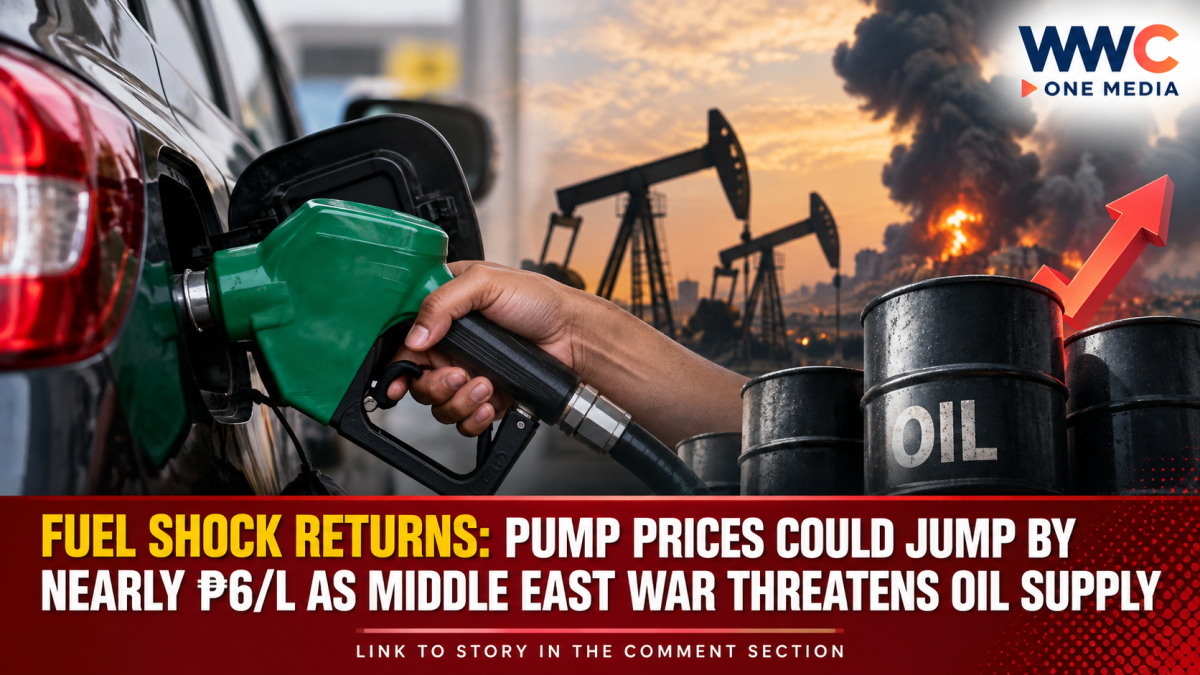
MANILA, Philippines — Filipino motorists are bracing for another painful trip to the gas station as domestic fuel prices are expected to surge this week, just days after a brief rollback offered consumers some relief.
Industry estimates indicate that diesel could increase by around ₱4.50 to ₱5.50 per liter, while gasoline may rise by ₱4 to ₱4.50 per liter for the fuel adjustment taking effect Tuesday, September 8. The final figures were expected to be announced by oil companies on Monday after the last trading data were factored in.
The projected increase comes as renewed fighting between the United States and Iran raises fresh fears of disruptions to oil shipments through the Strait of Hormuz, one of the world’s most important energy routes.
From rollback to another major increase
The possible hike comes almost immediately after motorists received a temporary reprieve at the beginning of September.
For the week beginning September 1, gasoline prices were reduced by roughly ₱0.30 to ₱0.40 per liter, while diesel and kerosene prices fell by about ₱3.80 to ₱3.90 per liter.
That relief, however, may prove short-lived.
The Department of Energy had already warned motorists ahead of the weekend that international developments were pointing toward another significant increase. DOE Oil Industry Management Bureau Director Rino Abad said the expected adjustment could be close to ₱4 to ₱5 per liter, citing renewed tensions in the Middle East and attacks involving vessels around the Strait of Hormuz.
Why oil prices are climbing again
The latest pressure is coming from the renewed escalation in the US-Iran conflict.
Industry officials said the fighting has increased the risk of disruptions to Middle Eastern energy supplies. At the same time, global diesel inventories remain tight and refinery disruptions in the Middle East and Russia are adding further pressure to fuel markets.
The Philippine peso’s weakness against the US dollar is another factor that can amplify the impact of higher international oil prices on local pump prices, according to industry estimates.
Oil markets are sending another warning
The pressure is not limited to Philippine fuel markets.
Reuters reported Monday that Brent crude had climbed to around $97 per barrel, while US West Texas Intermediate was trading above $92 per barrel. Brent had already gained 7.8% the previous week, while WTI advanced nearly 10%.
The latest jump followed attacks involving US and Iranian forces and a decline in shipping activity through the Strait of Hormuz.
Reuters reported that an average of only about 10 commodity ships per day had transited the Strait during the previous 10 days—the lowest level since May, according to Kpler data. The waterway previously carried roughly one-fifth of global oil supplies.
That matters greatly to the Philippines because disruptions along the route can quickly translate into higher international crude and refined-product prices.
What Filipinos could feel beyond the gas station
A sustained fuel increase would not affect only private motorists.
Higher diesel and gasoline costs can raise expenses for public transportation, delivery services, trucking, agriculture, fishing and other businesses that depend heavily on fuel.
Those additional costs can eventually feed into the prices of food and other basic goods as businesses pass higher transportation and operating expenses through the supply chain.
The country’s experience earlier this year demonstrated how sharply international oil shocks can affect domestic prices. Philippine fuel prices have recorded substantial cumulative increases despite occasional weekly rollbacks. GMA News reported that, following the latest adjustment before the anticipated September 8 hike, the year’s cumulative net increase had reached ₱54.62 per liter for gasoline, ₱55.26 for diesel and ₱47.85 for kerosene.
DOE data show how much prices have already moved
The latest DOE data for August 25–31 showed average Metro Manila prices of about ₱75.90 per liter for RON 91 gasoline, ₱89.40 for diesel and ₱118.10 for kerosene, according to a recent industry report citing government data.
These figures were already considerably higher than the averages recorded during February 24–March 2, before the latest Middle East oil shock intensified.
The bigger question: How long will the surge last?
Much depends on what happens next in the Middle East.
Reuters reported that OPEC+ left its October oil-output policy unchanged, while analysts warned that prolonged fighting could keep Middle Eastern supplies constrained for much of 2026. A full return to pre-conflict levels could take considerably longer if disruptions around the Strait of Hormuz persist.
For Filipino consumers, that means the coming fuel adjustment may be more than just another one-week price movement.
If international oil prices remain elevated, the effects could continue to ripple through transportation, logistics, food distribution and household budgets.
For now, motorists are waiting for the official fuel price announcements, which will determine exactly how much gasoline, diesel and other petroleum products will increase beginning Tuesday.
And after only a brief taste of lower pump prices, Filipino consumers may once again find themselves asking the same question: How high can fuel prices go before the next rollback finally arrives?
WWC ONE MEDIA J.M.S




Leave a Reply